
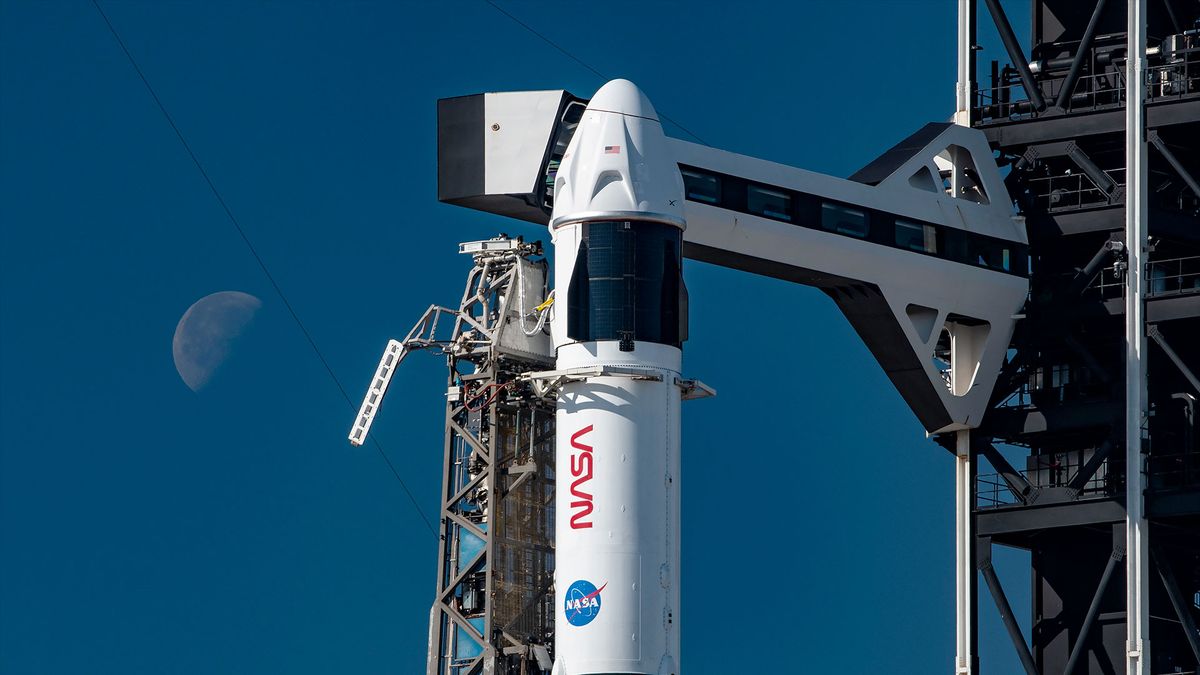
SpaceX has successfully launched its Crew-12 mission, marking another important step in long-term space research aboard the International Space Station. The mission carried four astronauts from the United States, Europe, and Russia into orbit for an extended eight-month stay. With this launch, scientists gain fresh opportunities to study how life, technology, and the human body adapt to microgravity.
A Powerful Start From Florida
The Crew-12 mission lifted off from Cape Canaveral Space Force Station in Florida aboard a Falcon 9 rocket. The launch took place in the early morning hours, lighting up the sky as the rocket climbed steadily toward orbit. Within minutes, the Crew Dragon spacecraft separated smoothly and continued its journey to the space station.
One of the most important moments came shortly after liftoff when the Falcon 9 booster returned safely to Earth. This successful landing once again highlighted how reusable rockets are improving mission efficiency and reducing launch costs.
The Astronauts Behind Crew-12
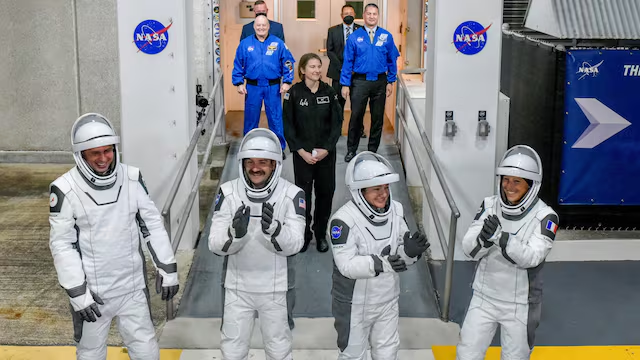
Crew-12 is commanded by NASA astronaut Jessica Meir, an experienced space traveler and marine biologist. She is joined by Jack Hathaway, a former U.S. Navy fighter pilot making his first spaceflight. The crew also includes European Space Agency astronaut Sophie Adenot from France and Russian cosmonaut Andrey Fedyaev, who is on his second mission to the station.
This diverse team reflects the strong international partnership that keeps the space station operating smoothly year after year.
New Experiments in Microgravity
Once docked, the crew will begin a busy research schedule focused on medical, biological, and technical experiments. One major area of study involves bacteria that cause pneumonia. By observing how these organisms behave in space, scientists hope to improve treatments for patients on Earth.
The crew will also conduct experiments on plant growth and the interaction between plants and microbes. These studies are essential for developing sustainable food systems for long-duration space missions. Understanding how crops grow in microgravity is a key requirement for future missions beyond low Earth orbit.
How Crew-12 Research Stands Out
| Research Area | Crew-12 Focus | Previous ISS Missions |
|---|---|---|
| Mission Length | 8 months | Around 6 months |
| Medical Studies | Advanced bacteria research | General health studies |
| Plant Science | Microbe-plant interaction | Basic plant growth |
| Technology Testing | Long-term systems testing | Shorter trials |
This comparison shows how Crew-12 expands on earlier missions by allowing more time for detailed experiments and data collection.
Why This Mission Matters
Crew-12 is the 12th long-duration mission SpaceX has flown for NASA since 2020. It proves that commercial spaceflight has become a dependable part of human space exploration. The space station itself remains the largest human-made structure in orbit and continues to serve as a unique laboratory that cannot be replicated on Earth.
NASA plans to keep the station operational until 2030, giving researchers many more chances to build on the work done by Crew-12. These experiments will help prepare astronauts for future missions to the Moon and Mars while also delivering real benefits back on Earth.
The Crew-12 launch is more than just another trip to orbit. It represents progress, cooperation, and a growing ability to unlock new knowledge through space-based research.