
Russia has officially blocked WhatsApp, one of the world’s most widely used messaging apps, and is now actively pushing citizens toward a state-backed alternative called MAX. The move has raised serious concerns about digital privacy and government surveillance, as millions of users suddenly find their daily communication under closer watch.
Russian authorities said the ban was necessary because WhatsApp failed to comply with national internet laws. These laws require messaging platforms to store user data and message records inside the country and make them available to government agencies when asked. WhatsApp, which relies on end-to-end encryption, does not allow such access and therefore could not meet these requirements.
WhatsApp criticized the decision, stating that blocking secure communication tools makes people less safe, not more. The company warned that isolating users from private platforms forces them toward services that may not fully protect personal data.
Why WhatsApp Was Blocked
The ban is part of a broader effort to tighten control over online platforms. WhatsApp was added to Russia’s official list of online information distributors in 2024. Once listed, companies must follow strict data storage rules or face restrictions.
Although WhatsApp no longer works on normal mobile and broadband networks, many users are still accessing it through VPN services. VPNs remain legal in Russia, but their use is becoming more common as restrictions increase.
Telegram and Other Apps Also Affected
WhatsApp is not the only messaging app facing pressure. Telegram recently experienced new limitations after regulators accused it of failing to protect user data. Telegram’s founder dismissed the claim and said the real goal was political censorship.
Over the past few years, Russia has blocked several global platforms, including Instagram, Facebook, and X. Each ban follows a similar pattern: foreign platforms are restricted, while local or state-supported alternatives are promoted.
MAX: Russia’s State-Backed Alternative
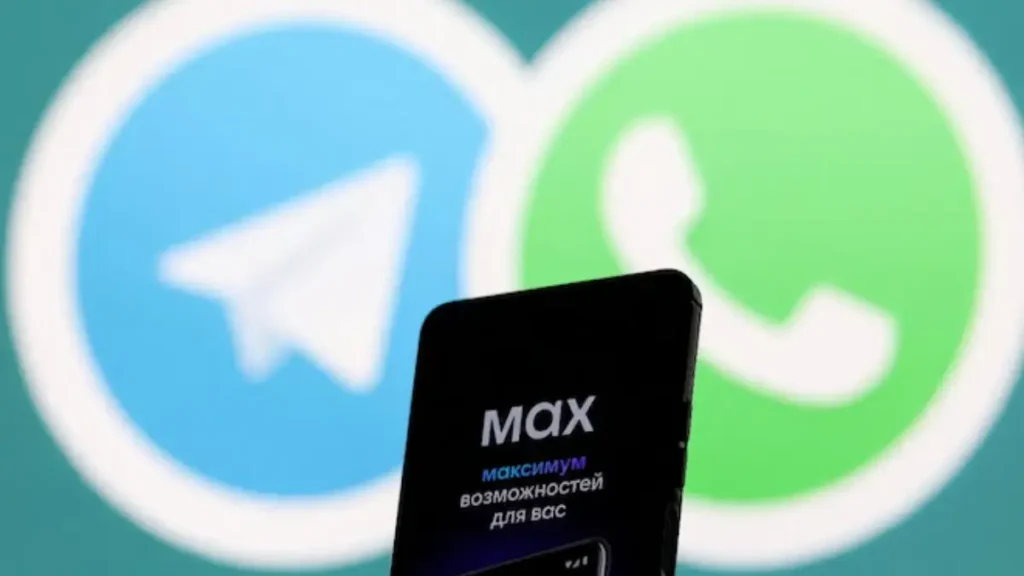
MAX was launched in 2025 with full government support. It is designed as a multifunction app that goes beyond messaging. Users can access online payments, government services, and appointment systems for medical and municipal needs.
To speed up adoption, authorities ordered MAX to come pre-installed on all new digital devices sold in Russia. While the company behind MAX says it only shares data after legal review, its terms allow user information to be provided to authorities when required by law. This has led many users to worry about constant monitoring.
WhatsApp vs MAX: How They Compare
| Feature | MAX App | |
|---|---|---|
| Ownership | Private company | Government-backed |
| Encryption | End-to-end encryption | Not clearly stated |
| Data Storage | Limited, privacy-focused | Stored and shared when required |
| Extra Services | Messaging and calls | Messaging + government services |
| Surveillance Risk | Low | High concern |
What This Shift Means for Citizens
Replacing WhatsApp with MAX signals a major shift in how digital communication works in Russia. While officials describe MAX as a convenient and secure platform, critics argue it reduces privacy and limits free expression.
Other countries have considered similar approaches but stepped back after public backlash. Russia, however, continues to move toward a tightly controlled digital environment.
For Russian users, messaging is no longer just about staying connected. It has become a reminder that online conversations are increasingly being watched, regulated, and redirected by the state.